
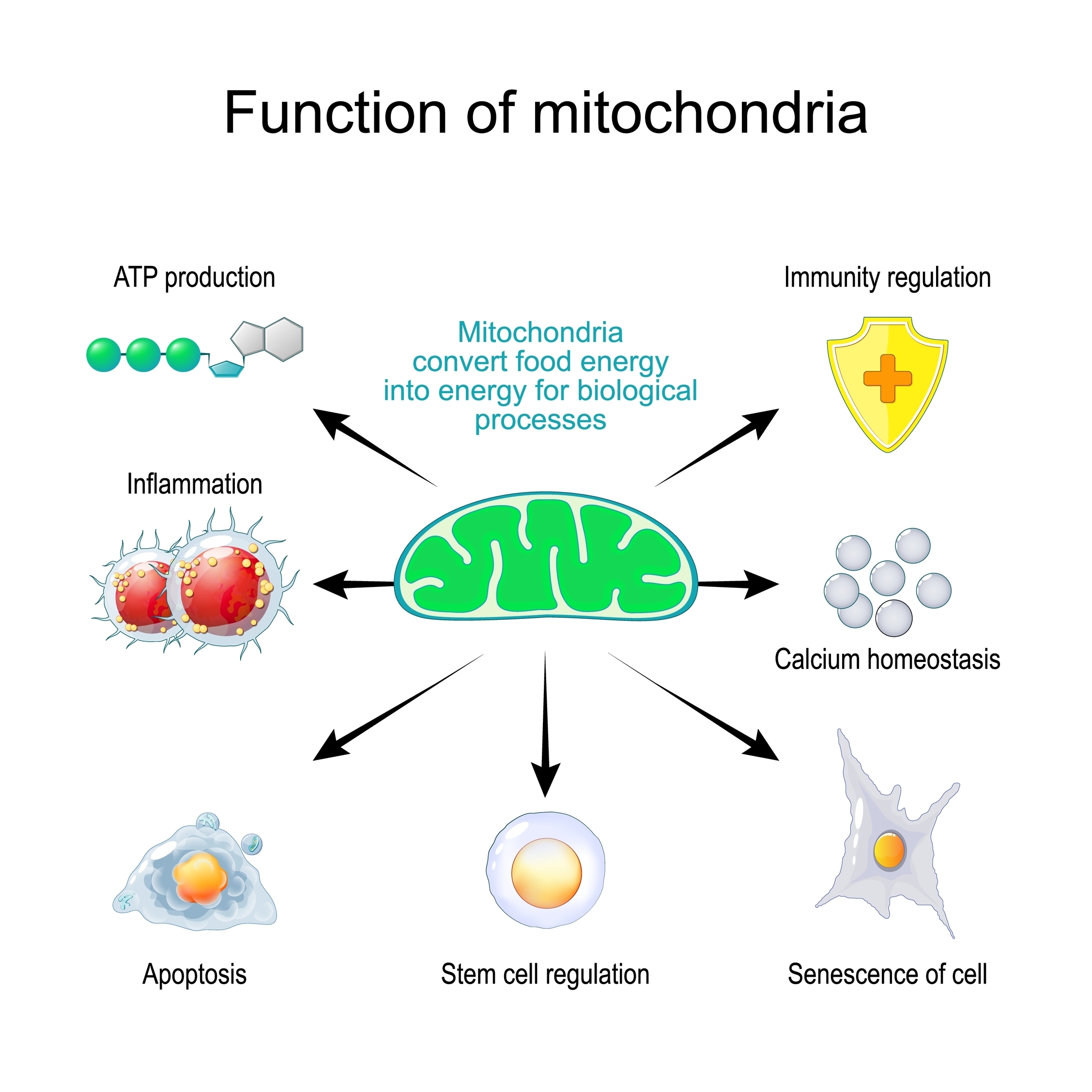
Mitochondria and metabolic health are deeply connected—more than most people realize. Often called the “powerhouses of the cell” mitochondria do more than just produce energy. These microscopic organelles are vital to fat metabolism, insulin sensitivity, cellular detoxification, and even cognitive health.
When mitochondrial function is optimal, your body efficiently converts nutrients into ATP (adenosine triphosphate)—your cells’ usable energy. But when mitochondria are impaired, it can lead to fatigue, insulin resistance, metabolic disorders, and accelerated aging.
So how do mitochondria influence energy production and metabolic health, and how can you support them for better well-being? Let’s dive into the science.
What is Mitochondria?
Mitochondria is a double-membraned organelle found in nearly every cell of the body. They play a key role in cellular respiration, the process that converts food into ATP (adenosine triphosphate), the body’s primary energy currency.
Each cell contains hundreds to thousands of mitochondria, with high-energy tissues like the brain, heart and muscles housing the most. This explains why mitochondrial dysfunction is linked to conditions like brain fog, heart disease and muscle weakness.
How Mitochondria Produce Energy
The mitochondrial energy production process involves three key stages:
 Glycolysis (Cytoplasm):
- Glucose is broken down into pyruvate, generating a small amount of ATP.
- Pyruvate is then transported into the mitochondria for further processing.
Krebs Cycle (Mitochondrial Matrix):- Pyruvate is converted into Acetyl-CoA, which enters the Krebs cycle.
- This cycle produces NADH and FADH₂, which carry electrons to the next step.
Electron Transport Chain (Inner Mitochondrial Membrane):- NADH and FADH₂ donate electrons, driving ATP production.
- This generates 90% of the body’s energy in the form of ATP.
When this process is efficient, you experience stable energy levels, better fat metabolism and improved endurance. However, mitochondrial dysfunction can lead to fatigue, insulin resistance and metabolic disorders.
Mitochondria & Metabolic Health
1. Fat Burning & Metabolic Flexibility
Healthy mitochondria allow the body to switch between glucose and fat for fuel, a state known as metabolic flexibility. This improves:
Fat loss by increasing energy expenditure.Blood sugar stability, reducing the risk of insulin resistance.Ketone production, which supports brain health and endurance.2. Insulin Sensitivity & Glucose Control
Mitochondria regulates insulin function by efficiently using glucose for energy. Dysfunctional mitochondria leads to glucose buildup, insulin resistance and type 2 diabetes.
3. Brain Function & Cognitive Health
Since the brain is an energy-intensive organ, mitochondrial dysfunction is linked to brain fog, memory loss and neurodegenerative diseases like Alzheimer’s and Parkinson’s.
How to Optimize Mitochondrial Function
To enhance mitochondrial health, focus on these key lifestyle strategies:
1. Fasting & Ketosis:
Intermittent fasting promotes mitochondrial biogenesis (new mitochondria formation).Ketones (from fasting or a ketogenic diet) fuel mitochondria more efficiently than glucose.2. Exercise & Movement:
High-intensity interval training (HIIT) and strength training stimulate mitochondrial growth.Walking & low-intensity movement prevent mitochondrial decline.3. Nutrient-Dense Diet:
Healthy fats (omega-3s, MCT oil) enhance mitochondrial energy production.Protein & amino acids (L-carnitine, CoQ10) support mitochondrial repair.Antioxidants (vitamin C, E, glutathione) combat mitochondrial oxidative stress.4. Cold Exposure & Heat Therapy:
Cold plunges & sauna use stimulate mitochondrial adaptation, improving metabolism.5. Prioritizing Sleep & Stress Management:
Quality sleep allows mitochondria to repair and detoxify.Reducing chronic stress prevents mitochondrial damage from excessive cortisol.Final Thoughts: Mitochondria & Your Health
Your mitochondria dictate your energy, metabolism and overall well-being. When functioning optimally, they enhance fat burning, cognitive performance and longevity. However, when damaged, they contribute to fatigue, insulin resistance, and metabolic decline.
By incorporating fasting, exercise, nutrient-dense foods and stress management, you can enhance mitochondrial health and unlock better energy production for a vibrant disease-free life.
Are you ready to optimize your mitochondria? Share your thoughts in the comments!