
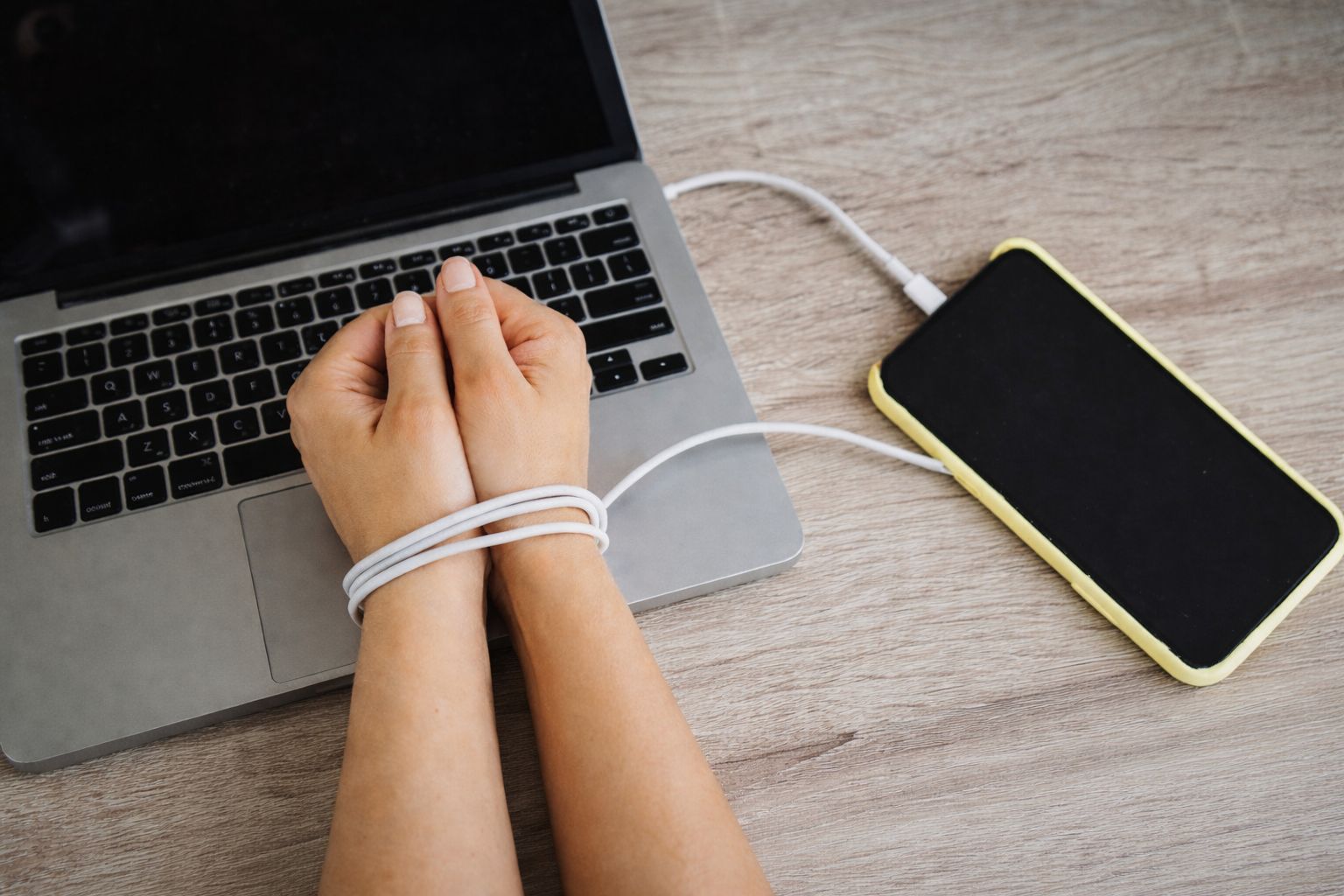
\We are living inside screens more than we are living inside our bodies. For most people, the day begins with a phone alarm and ends with scrolling in the dark. In between, work happens on laptops, relaxation happens on televisions and connection happens through notifications. This has become so normalized that questioning it feels extreme.
But normalization does not mean safety.
Human biology evolved around movement, sunlight, social presence and natural rhythms. Screens remove all of that while replacing it with artificial stimulation. The result is not just distraction – it’s a fundamental rewiring of attention, mood, motivation and emotional regulation.
What makes this problem dangerous is that it’s invisible. There’s no single breaking point. Instead, there’s a slow erosion of focus, resilience and inner quiet. And because “everyone does it,” we assume the consequences are personal failures rather than systemic overload.
This isn’t about fear. It’s about honesty.
Your Brain Wasn’t Built for Constant Stimulation
The human nervous system evolved in environments where stimulation was intermittent and meaningful. Effort led to reward. Silence followed activity. Darkness followed light. Screens collapse these natural cycles into one continuous stream of stimulation.
Every notification, video, scroll and message triggers dopamine – the brain’s motivation and anticipation chemical. Dopamine was never meant to be activated hundreds of times per day. When it is, the brain adapts by becoming less sensitive.
This leads to reduced motivation, shortened attention span, irritability, and an increased need for stimulation just to feel “normal.” Real life starts to feel dull not because it is, but because the brain has been conditioned to expect constant novelty.
This isn’t a willpower issue. It’s neurological conditioning. Understanding this removes shame and replaces it with responsibility.
Why It Feels Good and Hurts at the Same Time
Screens feel comforting because they offer immediate relief from discomfort. Bored? Scroll. Anxious? Watch. Tired? Distract. This short-term relief teaches the nervous system that discomfort should be escaped, not processed.
Over time, this creates dependency. The brain learns to outsource regulation to external stimulation instead of developing internal resilience. Silence becomes uncomfortable. Stillness feels restless. Emotional discomfort feels intolerable.
This is why people report feeling simultaneously overstimulated and numb. The system is overloaded, yet undernourished.
The relief screens offer is real but temporary. And each cycle of avoidance strengthens the habit. This is not moral failure. It’s learned behavior reinforced thousands of times.
Breaking this loop requires awareness, not punishment.
The Body Keeps the Score
Mental overload always shows up physically. The nervous system does not distinguish between emotional stress and sensory overload – it responds to both as threat.
Chronic screen exposure disrupts circadian rhythms through artificial light, suppresses melatonin, increases cortisol and keeps the body in a semi-alert state. Over time, this contributes to fatigue, inflammation, hormonal imbalance and immune dysfunction.
Many people experience symptoms like anxiety, digestive issues, skin flare-ups, headaches or autoimmune patterns without connecting them to constant stimulation. But the body keeps track when the mind dissociates.
What we often label as “mystery symptoms” are messages from a system that hasn’t been allowed to rest. Healing begins when we stop overriding these signals with distraction and start listening instead.
This Is a Business Model, Not a Coincidence
Digital platforms are not neutral tools. They are designed to maximize engagement, retention and time spent. Attention is the product. Your nervous system is the resource.
Algorithms reward emotional reactivity, novelty, outrage and comparison because these states keep people scrolling. The more dysregulated you are, the more predictable your behavior becomes.
This doesn’t mean technology is evil. It means it is optimized for profit, not for human health. Recognizing this removes self-blame and clarifies why boundaries matter.
Reclaiming autonomy starts with understanding that your attention has value. When you protect it, you reduce reactivity, improve focus, and regain a sense of internal authority that no algorithm can provide.
Reclaiming Power Starts With the First 30 Minutes
The first 30 minutes of the day set the neurological tone for everything that follows. Reaching for your phone immediately floods the brain with dopamine before any effort has occurred. This trains the brain to expect reward without engagement.
Delaying phone use allows dopamine levels to stabilize naturally. This improves discipline, emotional regulation and sustained focus throughout the day. It also reduces anxiety by preventing early overstimulation.
This is not about productivity hacks. It’s about nervous system leadership. When you start your day internally rather than reactively, you reinforce self-trust.
Thirty minutes of screen-free time is enough to create measurable change. Small boundaries, practiced consistently, restore agency faster than extreme detoxes.
What to Do Instead
Replacing screen time with intentional stillness may feel uncomfortable at first and that discomfort is the point. Boredom is not a flaw; it is a neurological reset.
Morning light exposure, gentle movement, breathwork, journaling, or silence all allow the nervous system to recalibrate. These practices don’t need to be perfect or spiritualized. They just need to be screen-free.
When stimulation is reduced, internal signals become clearer. Hunger cues normalize. Emotional awareness improves. Creativity returns. Focus deepens.
Stillness trains resilience. It teaches the body that safety does not require constant input. Over time, this becomes the foundation for sustained mental clarity and physical health.
You Don’t Need a Digital Detox – You Need Boundaries
Extreme digital detoxes often fail because they’re unsustainable. What creates lasting change is intentional structure.
Boundaries such as no phone in the bedroom, screen-free mornings, or designated offline blocks restore choice. Choice restores autonomy. Autonomy restores nervous system stability.
Technology becomes a tool again instead of a coping mechanism.
The goal is not to eliminate screens but to stop letting them dominate your biological rhythms. When boundaries are clear, guilt disappears. Use becomes conscious rather than compulsive.
Health is not about avoidance. It’s about alignment.
Final Thought
If your days are filled with consumption, reaction, and stimulation, ask yourself where presence fits in.
Stillness is not empty. Silence is not wasted. Discomfort is not dangerous.
They are the spaces where regulation, clarity, and strength are rebuilt.
Reclaiming your nervous system is not about doing more – it’s about allowing less. And in that space, power returns.